-
What is OSI 7 layers?
- conceptual framework used to understand and standardize the functions of a telecommunication
- They are organized into 7 layers
- Understanding them is a key part of learning computer network system
- The higher the number, the closer it is to the physical aspect.
- The lower, the more abstract and closer it becomes to the user
-
Tell me about TCP 3-way handshake
- TCP 3-way handshake is the way to establish the connection between 2 computers (server, client)
- client send synchronize packet to server
- server responds with SYN-ACK packet to acknowledge the receipt of SYN packet and sends its own SYN packet
- client send an ACK packet back to the server, acknowledging the receipt of the server’s SYN packet. This establishes a full-duplex commu. between 2.
-
Tell me about 4-way handshake
- TCP 4-way handshake is the way to finish the connection between 2 computers
- client that wants to finish the con. send finish packet
- sends back ACK packet
- Following the ACK, the receiving host sends FIN to the original sender
- The original sender completes the process
-
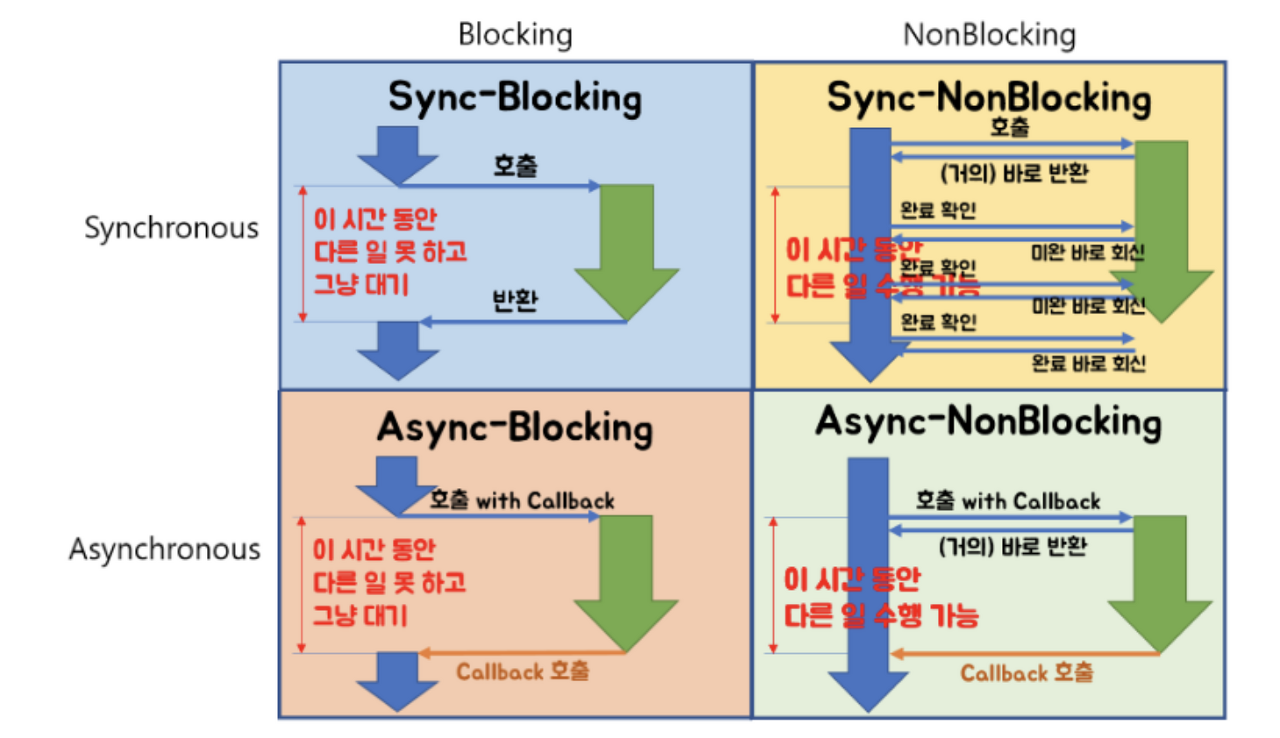
difference between Blocking, Non-blocking, Synchronous, Non-Synchronous
They are the terms for decsribing how I/O, network, inter-process communication works.
제어권(control authority)을 어떻게 처리(handling)
- Blocking : waits for the operation to complete
- Non-blocking : continue processing other tasks without waiting
호출되는 함수(called fun.)의 작업(done) 완료 여부(checking)
- Synchronous : coupled operations where the output is directly dependent on the processing of the input
- Non-Synchronous : decoupled from the calling thread, which means the operation can start, and the caller can move on to other tasks without waiting for the result
- What have you learned from the project?
- planning and organic collaboration